7 Effective At-Home Exercises for Weight Loss
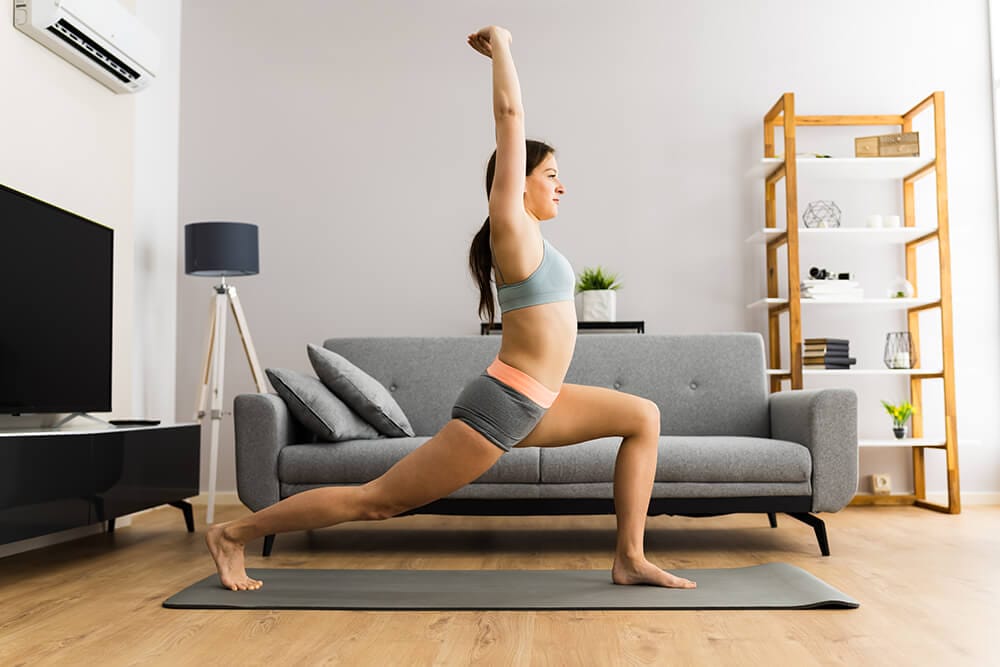
Table of Contents
ToggleIntroduction
Staying physically active plays a key role in overall health. Beyond supporting weight management, regular exercise helps maintain heart health, strengthens bones and muscles, improves mood, and boosts general wellbeing.
It’s also important to recognise that exercise and nutrition work best as a team. Focusing on one while neglecting the other—such as exercising without adjusting eating habits, or dieting without movement—can slow progress, increase fatigue, or affect metabolism.
Other influences matter too. Sleep quality, stress levels, certain medical conditions (like hypothyroidism or polycystic ovary syndrome), and medications can all affect how the body responds to weight-loss efforts. For people managing conditions such as diabetes, choosing appropriate exercises can be especially helpful, but any new routine should be discussed with a healthcare professional to ensure safety.
7 Best Exercises to Lose Weight at Home
Below are seven popular and practical exercises that can be done at home without gym access or specialised equipment. Together, they support strength, cardiovascular fitness, and overall health.
For weight management, combining aerobic exercise with resistance training on a regular basis tends to be most effective—especially when paired with a balanced, calorie-aware diet. Strength training at least twice a week can help preserve muscle mass while losing weight.
You may hear debates about the “best” time of day to exercise. While hormones like cortisol are naturally higher in the morning, current research doesn’t point to a universally ideal workout time. The most important factor remains consistency—choosing a time you can stick with long term.
1. Aerobic Exercises
Walking
Walking is one of the most accessible forms of cardio. Brisk walking can increase calorie burn while remaining gentle on the joints, making it suitable for most fitness levels. Some studies suggest that walking for 50–70 minutes, three times a week, may modestly reduce body fat and waist circumference over time, though results vary based on diet and individual metabolism.
Jogging and Running
Jogging and running are higher-intensity aerobic exercises that primarily engage the lower body and cardiovascular system. Jogging usually falls between 6–9 km/h, while running starts at around 10 km/h or faster. On average, a person might burn roughly 300 calories in 30 minutes of jogging and closer to 370 calories when running, depending on speed, terrain, and body weight.
While these activities can reduce overall body fat, it’s not possible to target fat loss from specific areas like the abdomen. Muscle tone may improve, but significant strength gains typically require resistance training.
Sample Routine (60 minutes):
-
Walk: 15 minutes
-
Jog: 15 minutes
-
Run: 15 minutes
-
Jog: 10 minutes
-
Cool-down walk: 5 minutes
2. Skipping (Jump Rope)
Skipping is a high-energy activity that elevates heart rate quickly and can burn a substantial number of calories. It also helps improve coordination and lower-body endurance. While it supports muscle tone, major strength gains require additional resistance exercises.
Basic Technique:
-
Stand upright on a flat surface with feet together
-
Hold the rope handles close to your thighs
-
Jump lightly as the rope passes under your feet
-
Increase speed gradually as you become comfortable
3. Planks
Planks are a core-stability exercise that activate the abdominals, shoulders, chest, back, hips, and glutes. They build muscular endurance, improve posture, and support balance. Although planks don’t burn large numbers of calories, they’re excellent for developing functional strength.
Common Variations:
-
Standard or Forearm Plank: Strengthens the core, shoulders, and back
-
Mountain Climbers: A dynamic variation that adds cardiovascular intensity and works multiple muscle groups
-
Reverse Plank: Stretches the body while strengthening the core, glutes, and shoulders
Mountain Climber Pattern:
-
Start in a plank position
-
Bring one knee toward your chest, then switch
-
Alternate legs for 20–25 repetitions
Reverse Plank Pattern:
-
Sit with legs extended
-
Place hands behind your hips
-
Lift hips to form a straight line from shoulders to heels
-
Hold for 40–60 seconds
4. Push-Ups and Pull-Ups
Push-Ups
Push-ups are a classic bodyweight exercise that target the chest, shoulders, triceps, and core. While they don’t burn as many calories as cardio, building muscle can slightly increase resting metabolism over time.
Push-Up Pattern:
-
Place hands slightly wider than shoulder-width
-
Keep body in a straight line
-
Lower chest toward the floor, then push back up
-
Perform 3 sets of 15 repetitions
Pull-Ups
Pull-ups primarily strengthen the back, arms, and shoulders. They require a pull-up bar but offer excellent upper-body conditioning.
Pull-Up Pattern:
-
Grip the bar with arms fully extended
-
Pull yourself up until your chin clears the bar
-
Lower slowly with control
-
Aim for 4 sets of up to 15 repetitions, adjusting as needed
5. Squats
Squats are fundamental for lower-body strength, targeting the thighs, hips, and glutes. They also improve balance and mobility.
Squat Pattern:
-
Stand with feet wider than hip-width
-
Push hips back and bend knees
-
Lower until knees are about 90 degrees
-
Keep heels grounded
-
Return to standing
Beginners can start with 3 sets of 12–15 repetitions, focusing on good form.
6. Lunges
Lunges strengthen the quadriceps, hamstrings, glutes, and core. They also enhance balance and coordination.
Lunge Pattern:
-
Step one leg forward
-
Lower until the front thigh is parallel to the floor
-
Keep the knee aligned over the heel
-
Push back to standing
-
Alternate legs for about 30 total repetitions
7. Yoga
Yoga combines physical movement, breathing, and mindfulness. While it’s not primarily a calorie-burning activity, it can support weight management by reducing stress, improving flexibility, and encouraging healthier habits.
Benefits include:
-
Better cardiovascular health
-
Improved muscle tone and flexibility
-
Balanced metabolism
-
Enhanced breathing and relaxation
Helpful Poses:
-
Warrior pose
-
Triangle pose
-
Bridge pose
-
Bow pose
-
Plank pose
-
Downward dog
-
Sun salutations
Approximate Calories Burned (Moderate Intensity)
-
Walking (4 mph): 135–189 calories per 30 minutes
-
Jogging/Running: 240–336 calories per 30 minutes
-
Skipping rope: 226–503 calories per hour
-
Yoga: 120–168 calories per 30 minutes
Actual calorie burn varies by body weight, intensity, and duration.
Best Time to Exercise
Whether you prefer morning or evening workouts, consistency matters more than timing. Morning exercise may help establish routines and support sleep, while evening sessions can sometimes feel easier due to higher body temperature and energy levels. The best time is simply the one you can maintain regularly.
Diet Tips to Support Weight Loss
-
Avoid fad diets promising rapid results—they’re often ineffective and unhealthy
-
Be cautious with weight-loss pills or devices; many are unsafe or short-lived in effect
-
Don’t skip meals or starve yourself—this can slow metabolism and cause fatigue
Final Note
Weight loss at home is most sustainable when exercise, nutrition, rest, and stress management work together. Focus on consistency, gradual progress, and habits you can maintain long term rather than quick fixes.
Share this:
- Share on Facebook (Opens in new window) Facebook
- Share on X (Opens in new window) X
- Share on LinkedIn (Opens in new window) LinkedIn
- Share on Reddit (Opens in new window) Reddit
- Share on WhatsApp (Opens in new window) WhatsApp
- Share on Tumblr (Opens in new window) Tumblr
- Share on Pinterest (Opens in new window) Pinterest