CANCER OF THE TROPH What’s the stomach?
The stomach is a muscular organ in the gastrointestinal tract that is responsible for storing and breaking down food. It is located in the upper abdomen, and its walls are lined with glands that produce stomach acid and enzymes to help digest food. What is stomach cancer? The food is mixed with stomach acid and enzymes to form chyme, a thick liquid that is sent to the small intestine for further digestion and nutrient absorption. When a DNA error (mutation) occurs in a cell, cancer develops. After that, the cells divide and expand unchecked. These accumulated cells form cancer. The mucus-producing cells that line the stomach’s innermost layer are where stomach cancer, also known as gastric cancer, begins. It then advances and spreads.
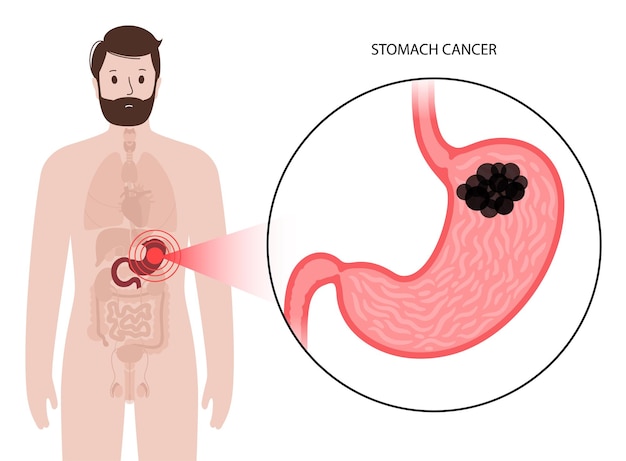
The fifth most common cancer in the world is stomach cancer. Over 10 lakh cases of gastric cancer are diagnosed each year around the world.What are signs and symptoms of stomach cancer
Gastric cancer like most gastrointestinal cancers is asymptomatic in initial stages.
Among the symptoms are: Bloating, indigestion, and heartburn Loss of appetite
Weight loss with no explanation Early satiety (feeling full after eating only a small amount of food)
Bloody or black stool
Abdominal pain that may become more severe after eating Vomiting and nausea, both with and without blood Anemia, or low hemoglobin levels How can the stage of stomach cancer be determined? Stage 4 involves determining the disease’s full extent. Following the diagnosis, we carry out tests to ascertain the extent of the tumor’s spread. This is done with a PET-CT or CT scan.
Stages of stomach cancer? What are the stages of stomach cancer?
Cancer of the stomach can be broadly classified as: Localised – Tumour is limited to the organ in which it started.
Regional spread means that the tumor has reached nearby lymph nodes or broken through the wall of the organ where it began. Distant spread – The tumour has spread to organs, which are away from the organ of origin of the tumour, called metastasis.
TNM staging
What is TNM staging?
The tumor’s size (T): How far has the cancer spread into the five layers of the stomach wall? Has cancer reached nearby structures or organs?
The spread to nearby lymph nodes (N): Has cancer spread to nearby lymph nodes? And to how many?
The spread (metastasis) to distant sites (M): Has cancer spread to distant lymph nodes or distant organs such as the liver or lungs?
The stages of stomach cancer range from I to IV. Chances of recovery from cancer (prognosis) depend on the stage of the disease at the time of diagnosis.
After surgery, a histopathological examination of the cancer specimen that was removed is used to determine the precise stage. It is called surgical staging. The stage determined after imaging tests is the clinical stage.
How is cancer of the stomach treated? Stomach cancer is treated with radiation therapy, chemotherapy, and surgery. The stage and location of the cancer, as well as the patient’s overall health, will determine the precise treatment. Surgery is the mainstay of treatment for stomach cancer and it involves removing part or all of the stomach with adjacent lymph nodes. The surgery for stomach cancer is called radical gastrectomy. Chemotherapy and radiation therapy further eradicate cancer cells. Chemotherapy or chemoradiation might be administered prior to surgery or after surgery.