Cancer trial raises hope of avoiding major surgery for rectal cancer
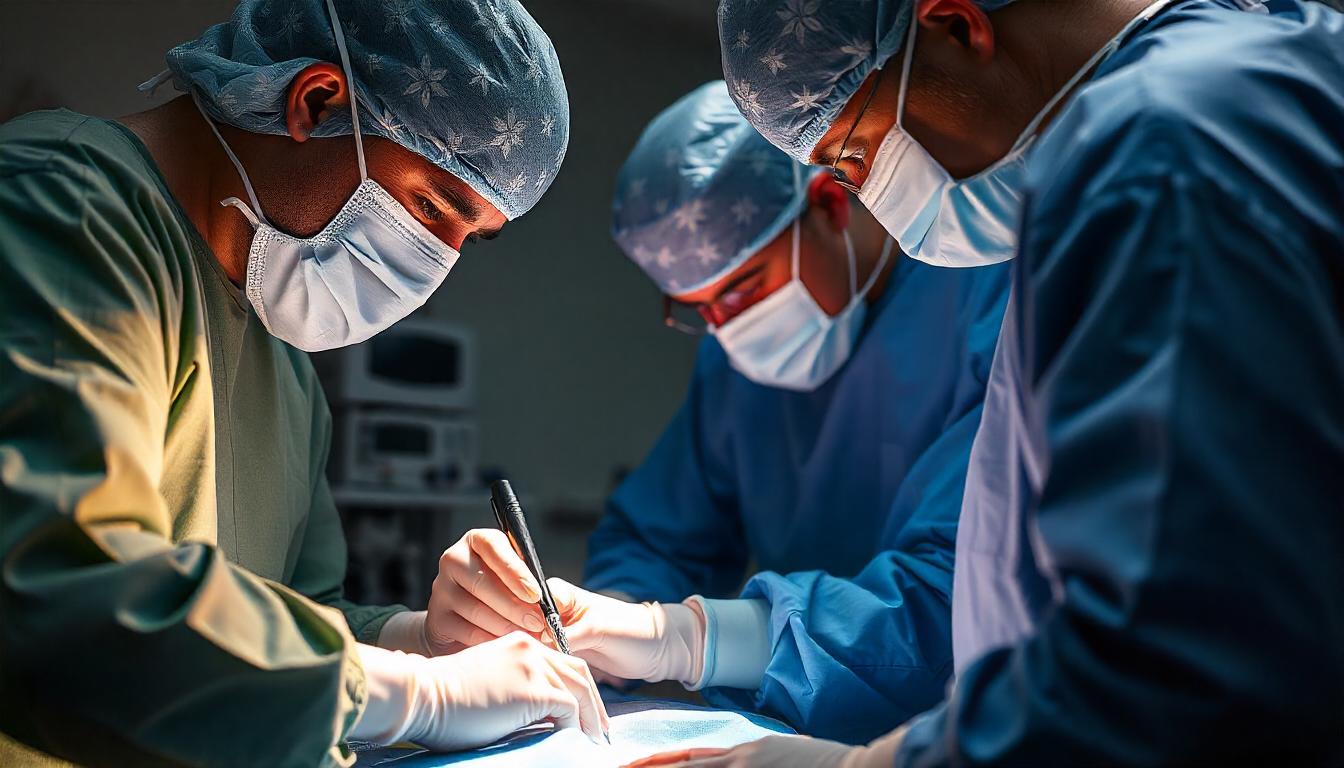
A major international clinical trial has found that some people with early-stage rectal cancer could potentially avoid major surgery — and the possibility of living with a permanent colostomy bag.
The STAR-TREC trial, led by researchers at the Universities of Leeds and Birmingham, explored whether a combination of chemotherapy and targeted radiotherapy could control early rectal cancer while preserving the rectum.
Published in The Lancet Oncology and funded by Cancer Research UK, the initial findings suggest that organ-preserving treatment could become a realistic option for many patients.
Cancer Research UK described the results as potentially “life-changing for thousands of people.”
A possible alternative to major surgery
Around 14,000 people are diagnosed with rectal cancer in the UK each year, with about one in three cases detected at an early stage, according to the University of Leeds.
The standard treatment for many patients involves a major operation known as total mesorectal excision (TME). The procedure removes the rectum, surrounding fatty tissue and nearby lymph nodes.
Although TME has a high cure rate, it can have a lasting impact on patients’ lives. Some people may require a temporary or permanent colostomy, in which waste is diverted through an opening in the abdomen into a bag.
The STAR-TREC researchers wanted to find out whether chemotherapy and radiotherapy could instead eliminate the cancer while allowing patients to keep their rectum.
Hugh’s experience
For 65-year-old Hugh Chown, from Harrogate, the trial offered an alternative after he was diagnosed with rectal cancer.
Hugh initially contacted his GP after experiencing occasional bleeding for several months.
“I got the diagnosis – it was totally unexpected. I was shocked but accepting of it. I knew worrying wouldn’t help, so I just focused on living life,” he said.
About two weeks later, his consultant told him about the clinical trial.
Hugh was told that the conventional treatment would involve surgery and that there was a high chance he would need a permanent colostomy bag.
But his consultant believed he had a good chance of responding positively to the trial treatment.
“The decision to participate wasn’t difficult,” Hugh said.
He viewed surgery as a fallback option if the treatment failed.
Five weeks of treatment
Hugh took chemotherapy tablets twice a day and underwent one radiotherapy session each day, five days a week, for five weeks.
Initially, the side effects were limited. But by the third week, he began experiencing increasing tiredness and fatigue.
“The fatigue also continued to get worse for a few weeks after the treatment stopped,” he said.
It took around six months for the effects to disappear completely. However, Hugh said this was a relatively small price to pay compared with major surgery and the possibility of a permanent colostomy.
Follow-up tests showed that the treatment had worked.
“The consultant said I’d had a perfect result and the cancer was gone,” he said.
A further colonoscopy 16 weeks later also showed no sign of cancer.
Hugh subsequently underwent regular monitoring as part of the trial before moving on to standard NHS cancer surveillance.
“My last check was in May this year and everything was fine,” he said.
A personal connection to bowel cancer
Hugh’s daughter, Rachel, supported him throughout his treatment.
The 33-year-old works in cancer research and innovation at The Christie NHS Foundation Trust in Manchester, giving her a professional understanding of the treatment options her father faced.
Rachel also has a deeply personal connection to bowel cancer. Her mother died from the disease when Rachel was just nine years old.
“I was nine when my mum died of bowel cancer, but outcomes now are very different,” she said.
She said her experience working in cancer care helped her understand the choices available to her father and gave her confidence that the trial was a strong option for him.
What did the trial find?
More than 400 patients were recruited from cancer centres across Europe for STAR-TREC.
The trial was co-led by Professor David Sebag-Montefiore in Leeds and Professor Simon Bach at UCL, with the University of Birmingham coordinating the study.
The initial results found that, during the first 12 months, four out of five patients receiving chemotherapy alongside radiotherapy avoided major surgery.
That compared with three out of five patients who received radiotherapy alone.
Patients were followed for 30 months. The longer-term results are still being analysed and are expected to be published in 2027.
Importantly, the treatment was not successful for everyone. Patients whose cancer remained after treatment underwent surgery to remove the remaining cancerous tissue.
‘A smarter, kinder’ approach
Professor Sebag-Montefiore described the findings as exciting and said they demonstrated how a more targeted approach to radiotherapy could potentially spare patients from major surgery.
He said the smaller, more precise radiotherapy treatment developed specifically for STAR-TREC resulted in relatively low levels of severe short-term side effects.
Professor Bach said that for decades, patients had effectively been asked to accept losing their rectum as part of the price of curing cancer.
“These results suggest that for many people, this price no longer has to be paid,” he said.
Cancer Research UK’s chief executive, Michelle Mitchell, said the findings could transform treatment for thousands of patients.
She also highlighted the role of bowel cancer screening in detecting more cancers at an earlier stage, when patients are more likely to survive.
But earlier diagnosis does not necessarily mean easier treatment, she said, with many patients still facing difficult and potentially life-changing side effects.
What happens next?
The STAR-TREC results are promising, but they do not mean surgery can now be ruled out for people with rectal cancer.
The longer-term follow-up will be important in determining whether organ-preserving treatment can keep cancer under control over many years, and which patients are most likely to benefit.
For patients such as Hugh, however, the trial offers a glimpse of a future in which treating rectal cancer does not necessarily mean losing the rectum — or living with a permanent colostomy.